
When it’s time to re-bristle the sweeper attachment on your skid steer, wheel loader, or tractor, you are faced with a critical decision. It’s not just about the size of the wafer; it’s about the material.
Choosing the wrong bristle material is the most common cause of poor sweeping performance, rapid brush wear, and damaged surface substrates. An all-wire brush on decorative pavers is a disaster. An all-poly brush on compacted construction mud is useless.
Before you order your next replacement kit, you need to understand the mechanics of how different materials interact with the debris and the surface beneath it.
As a direct-to-consumer factory manufacturing industrial sweeper brushes, we break down the three main options—Polypropylene (Poly), Steel Wire, and Combination (Combo)—to help you choose the right tool for the job.
The Core Concept: Flick vs. Cut
To understand which brush you need, you must understand how a rotary sweeper actually cleans. It is not just pushing dirt like a broom in your kitchen.
The Flick Action: This is required to move loose debris. The bristle hits the ground, bends slightly, and then snaps back, flicking the sand, leaves, or snow forward into the hopper or off the road.
The Cutting Action: This is required for stuck-on debris. The bristle tips must be rigid enough to dig into compacted mud, ice, or asphalt millings to rip them loose from the surface.
Different materials excel at different actions.
1. Polypropylene (All-Poly) Wafers
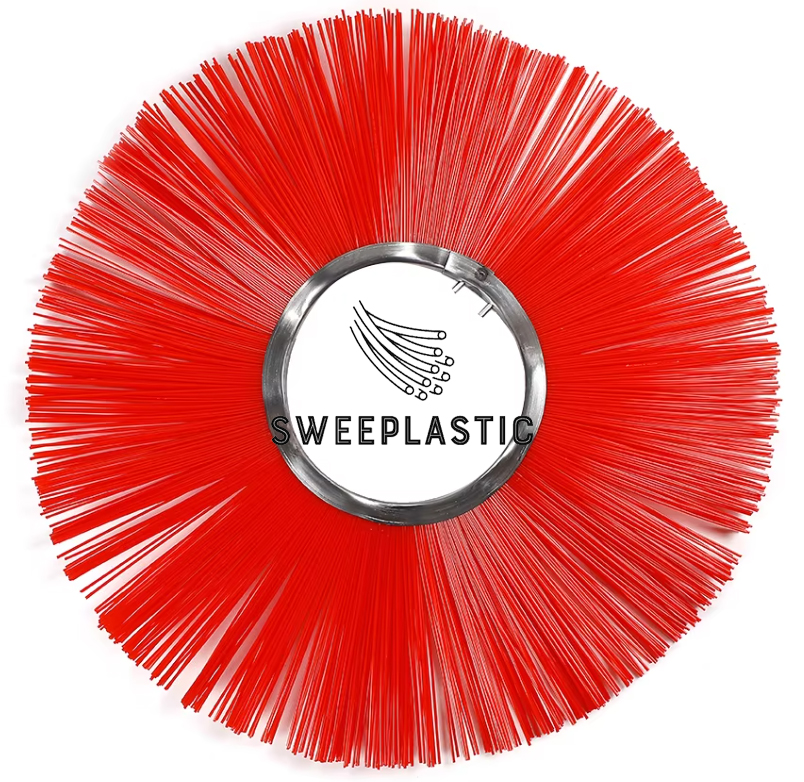
The industry standard. Poly wafers are made from heavy-duty, extruded polypropylene filament. They are almost always “convoluted” (wavy) to create space between bristles for grabbing debris.
The Mechanics: Poly relies entirely on flick action. The bristles are flexible, durable, and create a tight seal against the ground.
The Pros:
Surface Safety: This is the primary advantage. Poly is non-abrasive. It is safe for use on seal-coated asphalt, stamped concrete, pavers, epoxy warehouse floors, and airport runways.
Excellent Flick: Great for moving loose, dry materials like sand, dust, gravel, and leaves.
Chemical Resistance: Unaffected by road salts, oils, and most job site chemicals.
Better for Light Snow: Poly does an excellent job of flicking dry, fluffy snow cleanly.
The Cons:
Zero Cutting Power: Poly will just glide over the top of compacted mud, heavy clay, or ice.
Heat Sensitivity: If an operator applies too much down-pressure, friction creates heat. Poly will melt and smear on hot asphalt, ruining the brush instantly.
Best For: Municipal street sweeping, finished parking lots, warehouse interiors, and final site cleanup where surface damage is a concern.
2. Steel Wire (All-Wire) Wafers

These wafers use high-carbon spring steel tines instead of plastic filaments.
The Mechanics: Wire relies on cutting action. The steel tips are rigid and aggressive, designed to scrape and gouge stubborn material loose.
The Pros:
Aggressive Cleaning: The only option for ripping up dried, compacted mud tracked onto job site entrances.
Ice Management: Excellent for breaking up thin ice patches in winter maintenance.
Abrasion Resistance: Handles jagged materials like asphalt millings better than soft poly.
The Cons:
Surface Damage: Wire will scratch surfaces. Never use it on decorative concrete or sealed driveways. It can also damage airport runway lighting fixtures.
Brittle Failure (Fatigue): Steel doesn’t like to bend repeatedly. If operated with incorrect down-pressure, the wire bristles will fatigue at the base and snap off prematurely.
Poor Flick: Wire is too stiff to effectively flick light dust; it tends to leave a fine haze behind.
Best For: Heavy construction site entrances, scraping mud, asphalt road construction prep, and industrial yards where surface finish doesn’t matter.
3. Combination (Combo) Wafers
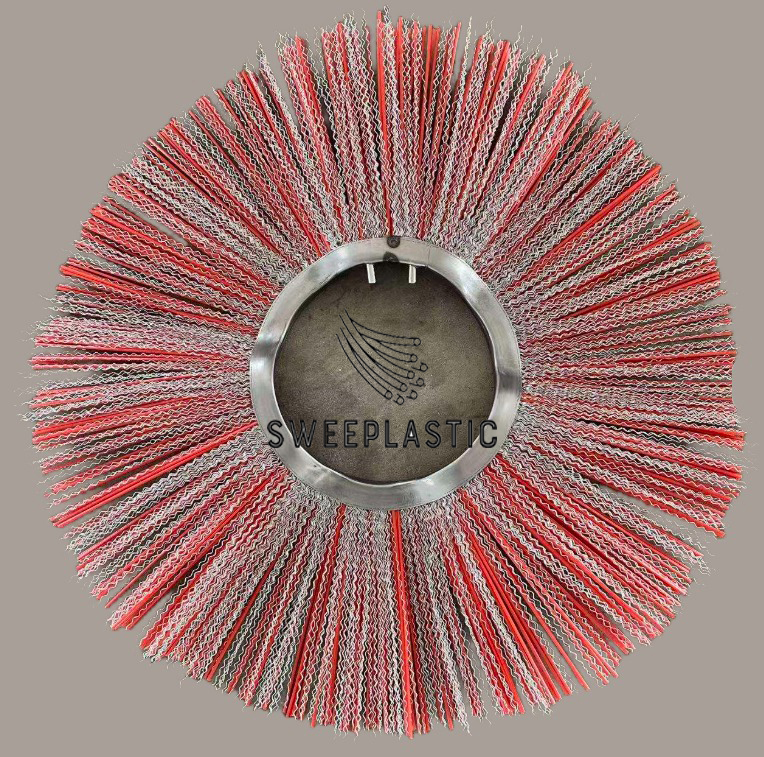
For 75% of heavy-duty applications, the “Combo” kit is the superior solution. These kits typically alternate one poly wafer and one wire wafer along the entire length of the broom core.
The Mechanics: Synergy. You get the cutting action of the wire followed immediately by the flick action of the poly.
Why It Works:
The steel bristles are slightly stiffer, hitting the compacted debris first and breaking it loose. The flexible poly bristles follow behind, grabbing the loosened material and flicking it away.
If you used only wire, you might loosen the mud but leave streaks behind. If you used only poly, you wouldn’t move the mud at all. The combo does both.
The Pros:
Versatility: The “do-it-all” setup for machines that move between different tasks.
Effective on Heavy Debris: Ideal for wet, heavy snow/slush mix, gravel, and general construction muck.
Increased Longevity: The poly wafers help support the wire wafers, reducing the flexing that leads to wire fatigue and breakage.
The Cons:
Still Abrasive: Because it contains wire, it is still not safe for delicate surfaces like seal coat or pavers.
Best For: General road construction, sweeping behind milling machines, heavy winter maintenance, and rental fleet machines that face unpredictable jobs.
Comparison Matrix at a Glance
| Feature | All-Poly | All-Wire | Combo (Poly/Wire) |
| Primary Action | Flick | Cut/Scrape | Cut & Flick |
| Loose Sand/Dust | Excellent | Poor (Leaves haze) | Good |
| Compacted Mud | Poor | Excellent | Very Good |
| Snow & Slush | Good (Dry snow) | Fair (Ice breaking) | Excellent (All-around) |
| Surface Safety | Safe for all | Damages delicate surfaces | Damages delicate surfaces |
| Common Failure Mode | Melting (heat) | Snapping (fatigue) | Even wear |
A Critical Note on Down-Pressure
Regardless of which material you choose, the #1 enemy of brush life is excessive down-pressure.
Many operators believe “pushing harder cleans better.” This is false.
Correct Operation: The bristle tips should just barely strike the surface, allowing them to flick or cut as designed.
Incorrect Operation: Too much pressure mashes the bristles flat against the ground. This is called “mopping.” It generates massive heat (melting poly) and bends wire past its breaking point (snapping steel).
A properly set brush lasts longer and cleans better.
Get the Right Setup Direct from the Factory
Don’t settle for generic brushes that wear out in a week. We manufacture high-quality replacement wafer kits for virtually every brand of sweeper attachment, including Bobcat, Case, Caterpillar, John Deere, and more.
We can configure custom kits—all-poly, all-wire, standard combo, or heavy-duty sandwich combos—based exactly on your job site requirements.
GET IN TOUCH
15 Responses