
A clean construction site isn’t just about aesthetics; it’s about safety, compliance, and efficiency. Whether it’s managing track-out at the gate to avoid EPA fines, clearing gravel before paving, or doing final cleanup for handover, sweeping is a constant requirement.
Skid steers, wheel loaders, and tractors equipped with sweeper attachments are the standard tools for the job. But all too often, site managers use the wrong tool for the task. They run the same general-purpose brush for wet mud that they use for dry sand, leading to poor results and rapidly destroyed brushes.
To maximize productivity and minimize downtime, you must match the wafer brush composition to the specific debris you are facing on site.
This guide breaks down the three most common construction site challenges—sand, mud, and heavy debris—and identifies the best sweeper brush setup for each.
Challenge 1: Sweeping Sand and Fine Particulate Dust
The Scenario: Final site cleanup on concrete or asphalt, sweeping silica dust before sealing, or managing fine sand drift in dry environments.
The Problem with the Wrong Brush: If you use a brush that is too aggressive (like all-wire) or has bristles spaced too far apart, it will simply pass over fine sand. You’ll be left with streaks and a haze of dust that requires a second or third pass.
The Solution: All-Poly Convoluted Wafers
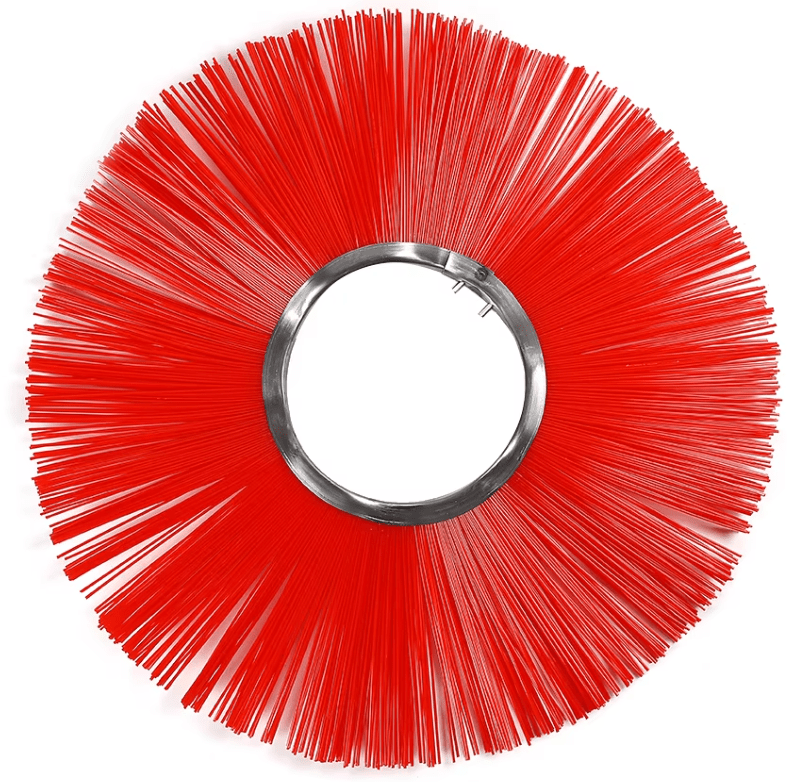
For fine, dry materials like sand and cement dust, you need maximum surface contact and “flick.”
Why Poly: Polypropylene bristles are flexible and dense. They act like thousands of tiny brooms creating a tight seal against the ground, ensuring fine particles don’t escape underneath.
Why Convoluted (Wavy): The wavy shape of the wafers prevents the bristles from matting together into a solid drum. The spaces created by the wave allow the sand to be captured and flicked forward into the hopper efficiently.
The Verdict: For dry sand and fine dust on finished surfaces, stick to 100% Polypropylene Convoluted Wafers.
Challenge 2: Sweeping Heavy, Compacted Mud
The Scenario: The most common construction headache. Trucks leaving the site track heavy clay and soil onto paved entrance roads. Rain turns dust into a thick paste that dries into concrete-like clumps.
The Problem with the Wrong Brush: An all-poly brush is useless here. The soft bristles will glide right over the top of compacted mud. If the operator tries to compensate by applying more down-pressure, the poly bristles just bend backward and rapidly wear out without cleaning anything.
The Solution: The “Combo” Wafer Kit (Poly/Wire Mix)

Compacted mud requires a two-stage attack: it must be cut loose before it can be swept up.
The Wire’s Job: In a combo kit (usually alternating one poly wafer and one wire wafer), the steel wire bristles are slightly stiffer and more aggressive. They act as scarifiers, cutting into the dried mud and ripping it loose from the pavement.
The Poly’s Job: Once the mud is loosened by the wire, the poly bristles follow behind to grab the debris and flick it away.
The Verdict: For tracked-out mud, wet soil, and caked-on dirt, a 50/50 Poly/Wire Combination Kit is the industry standard necessity.
Challenge 3: Sweeping Heavy Gravel, Rocks, and Asphalt Millings
The Scenario: Road construction projects involving milling machines, cleaning up aggregate spills, or preparing a sub-base for paving.
The Problem with the Wrong Brush: This material is incredibly abrasive and heavy. An all-poly brush will struggle to lift heavy rocks and will be chewed up quickly by the sharp edges of asphalt millings. An all-wire brush will move the material well but is prone to having its bristles snap off if they hit an immovable object (like a manhole cover or curb).
The Solution: Heavy-Duty Combo or “Sandwich” Kits
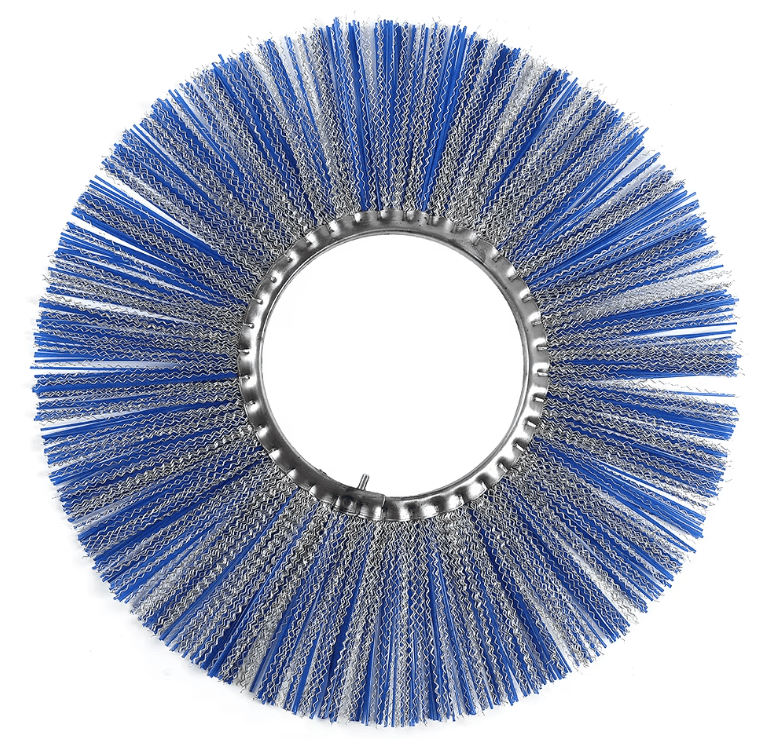
Like mud, heavy debris requires the cutting power of wire combined with the lifting power of poly. However, for extremely heavy or abrasive environments, you may need a beefier setup.
Standard Combo: A standard 50/50 mix works well for general gravel.
“Sandwich” or Heavy-Wire Combo: For truly brutal environments like asphalt milling, some operators prefer a “sandwich” configuration (e.g., one poly wafer sandwiched between two wire wafers) or a kit with a higher ratio of wire to poly (e.g., two wire wafers for every one poly). This provides maximum abrasion resistance and lifting power for heavy rocks.
The Verdict: For heavy gravel and millings, start with a standard Poly/Wire Combo. If you find you need more aggression or longevity, move to a wire-heavy configuration >>.
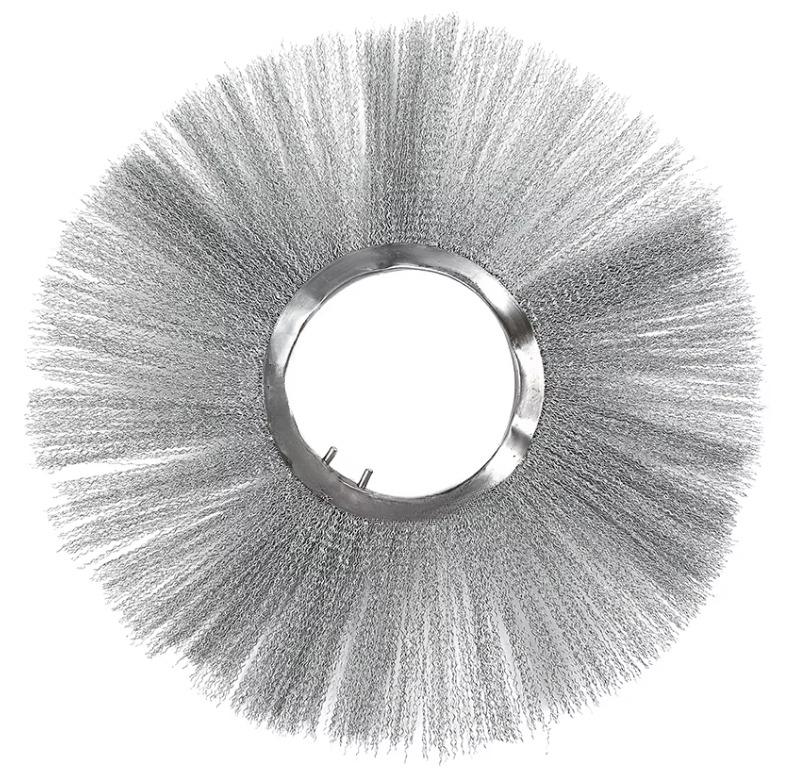
Summary: The Right Tool for the Job
Don’t waste man-hours making three passes with the wrong brush.
| Debris Type | Recommended Brush | Why? |
| Dry Sand & Fine Dust | All-Poly Convoluted | Tight seal to ground, excellent flicking of fine particles. |
| Compacted Mud & Soil | Poly/Wire Combo | Wire cuts the mud loose; poly flicks it away. |
| Gravel & Millings | Poly/Wire Combo (or Heavy Wire) | Handles abrasion well and has the strength to lift heavy material. |
Get Factory-Direct Replacements for Your Fleet
No matter what brand of attachment you run—Bobcat, Caterpillar, Deere, or others—we manufacture replacement wafer kits designed for your specific site challenges.
Stop buying generic brushes that wear out in a week. Equip your machines with the right bristles for the mud, sand, and rock you face every day.
2 Responses